
New Hire Welcome Notes Before Everything Turns Into Paperwork
Plan a welcome note that arrives at the right time, names real people, and supports the first month instead of decorating day one.
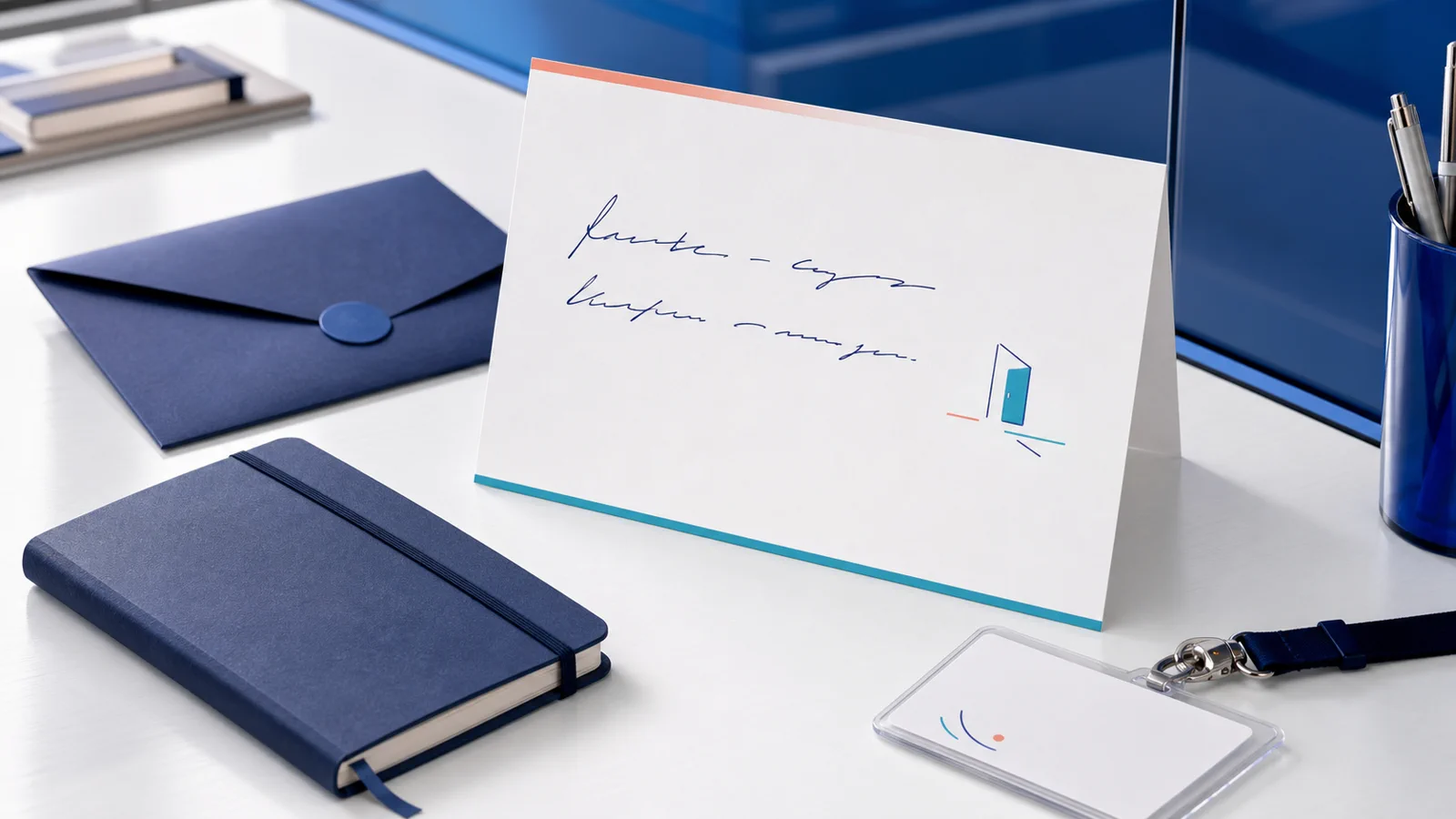
The welcome starts before the first login
A new employee is already forming an opinion while HR is still provisioning accounts. BambooHR reported that 29% of new hires decided whether a job was the right fit within the first week, and 70% decided within the first month. Treat the offer-to-start gap as part of onboarding, especially when a long notice period leaves the employee hearing nothing from the new company.
Source:BambooHR 2023 onboarding studySend a pre-start note after the offer is accepted, the screening process is complete, and the start date is firm. Aim for arrival several days before day one. If the date changes after fulfillment begins, contact the new hire directly rather than pretending the old plan is still current.
Give each point in the first month a different job
- Before day one: confirm the person is expected and name their first human contact.
- End of week one: acknowledge the amount they have had to absorb and point to one place they can ask for help.
- Around day thirty: mention a real contribution, question, or connection from their first month.
- At day sixty or ninety: use a manager note for progress that deserves recognition, separate from the performance check-in.
First-year attrition made up roughly 40% of turnover in Work Institute's 2025 report. A card does not address a bad manager, confusing expectations, or a broken role. It does give the company a planned reason to notice whether the employee is receiving help and forming relationships during the part of tenure where many exits occur.
Source:Work Institute 2025 Retention ReportWrite the note from facts the new hire can recognize
Include the employee's preferred name, role, team, start date, and one known detail about the welcome. Do not promise equipment, access, travel, schedule flexibility, or benefits unless the responsible owner has confirmed them. Avoid jokes about surviving onboarding or being thrown into the deep end. Those lines can sound ominous when the employee has no context yet.
- Hiring manager prompt: What are you genuinely looking forward to working on with this person?
- Teammate prompt: What will help them feel less lost in the first week?
- Thirty-day prompt: What did they learn or contribute that you noticed?
- Remote-hire prompt: Who should they contact when a work app or process does not make sense?
- Review prompt: Does any sentence create a commitment the company has not approved?
Make sure the card and onboarding plan agree
BambooHR found that 87% of new hires hoped to make a friend at work and 93% wanted to shadow a colleague. If the card says the team is excited to meet them, put an actual person on the calendar. Name a buddy, schedule the shadowing time, and give the manager a first-week check-in. The physical note feels stronger when the next few days prove it was true.
Source:BambooHR 2023 onboarding studyFor relocation, international hires, or contingent start dates, wait until the appropriate approvals are complete. Ask whether mail can safely go to the address on file. A surprise envelope at a shared household can reveal a job change the employee has not announced.
The send needs owners and a cutoff
- Recruiting confirms the accepted offer, start date, preferred name, and safe mailing address.
- The manager supplies the personal sentence by the stated deadline.
- HR reviews the recipient, message, artwork, and any local employment considerations.
- The send owner releases the card early enough for the expected mail window.
- The onboarding owner records arrival issues and updates the address source rather than patching one list.
PenBuddy can prepare the card from imported employee information, keep the design and message visible for review, and send the approved piece to fulfillment. Start-date changes and withdrawals still require a human owner. Keep the cutoff clear so a questionable card can be held instead of mailed because the automation reached its date.
What a card cannot fix
Do not use a card to paper over a missing manager, unclear job scope, delayed paycheck, inaccessible tools, or an unsafe work environment. Microsoft researchers found that new hires still had meaningful network gaps after a six-month onboarding phase. The relationship-building work continues long after the welcome package is gone.
Source:Microsoft Research on new employee networksMeasure whether cards were approved and sent on time, then connect that operational result to broader onboarding feedback. Ask new hires whether the note felt accurate and whether the named people followed through. A card program should reveal gaps in the welcome, not hide them.