
Handwritten Notes vs. Gift Cards for Employee Recognition
Gift cards give employees spending value. Handwritten notes give the recognition a voice. Compare when to use either one and when the right answer is both.
Product details were checked on July 14, 2026. Features and prices change, so confirm purchase-critical requirements with the vendor. Product names belong to their respective owners; PenBuddy is not affiliated with the companies compared.
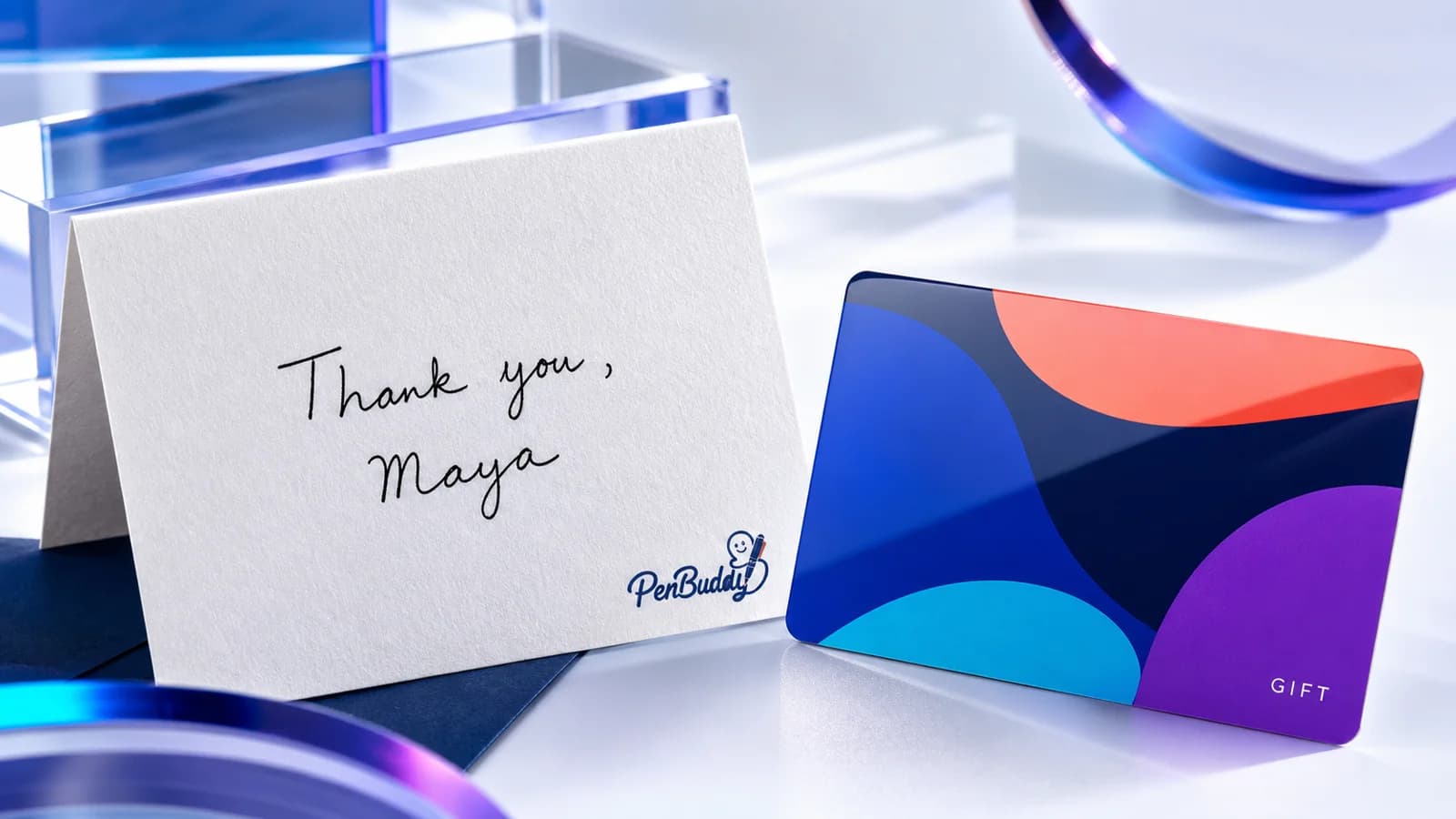
A gift and a thank-you do different things
If an employee covered an emergency shift, finished a difficult launch, or reached ten years with the company, a gift can be generous without saying much. The employee knows what they received but may still wonder what the company noticed. A note can name the effort, the effect on the team, and why it mattered.
That does not make a note a substitute for fair pay, a promised bonus, or a meaningful reward. It also does not make gift cards cold by default. The practical question is whether the moment calls for money, words, or both.
Choose a gift card when useful choice is the point
- Spot rewards where the company wants to attach real monetary value.
- Holiday or appreciation budgets employees are already expecting.
- Contest prizes with published rules and consistent amounts.
- Remote teams where shipping one standard physical gift would create more waste than value.
- Moments where recipient choice matters more than having an object selected for them.
Blackhawk Network's 2024 employee appreciation research reported that 81% of surveyed employees said employer holiday gifts made them feel valued. Blackhawk sells payment and reward products, so the source has a commercial interest, but the result is still a useful reminder: employees can genuinely appreciate a practical gift.
Source:Blackhawk Network employee appreciation researchChoose a note when the words are the recognition
A manager thank-you after months of behind-the-scenes work is mostly about being seen. So is a welcome note before a new hire's first day, or a work anniversary message that recalls how someone's role changed. A generic gift card email can miss that part even when the amount is appreciated.
Experiments on gratitude letters found that writers underestimated how positive and surprised recipients would feel and overestimated how awkward the message would be. The study did not compare employee gift cards with cards. It does address a common management problem: people often talk themselves out of writing the thank-you.
Source:Kumar and Epley, Undervaluing GratitudeOften, the strongest choice is a gift with a real note
Pairing the two does not require a long letter. Two or three sentences can be enough: name the work, explain its effect, and thank the person without exaggeration. The message should sound like the manager knows what happened. A copied paragraph about dedication and excellence weakens an otherwise thoughtful gift.
- For a project award, state the amount consistently and use the note for the personal detail.
- For an anniversary, match any reward to a published tenure policy and let the note speak to the person's actual year.
- For a company-wide event, keep gift value equitable while allowing manager messages to vary.
- For a difficult personal moment, ask whether a gift is appropriate before sending one.
Budget and tax handling belong in the decision
For U.S. employers, the IRS says cash-equivalent fringe benefits such as gift cards generally cannot be excluded as de minimis benefits, regardless of amount. That can affect wages, withholding, and reporting. This is general information, not tax advice; payroll or a tax professional should confirm the treatment for your program and jurisdiction before launch.
Source:IRS Publication 15-B (2026)Operationally, budget for the whole program: reward value, platform or vendor fees, postage, payroll administration, replacement for lost codes, and the time needed to approve exceptions. Comparing only the face value of a gift card with the price of a mailed note does not compare like with like.
Avoid the recognition mistakes money cannot cover
- Publish who is eligible and what determines reward value.
- Check dietary, religious, geographic, and accessibility constraints before choosing a limited-use card.
- Give employees a way to report a missing or unusable reward without asking their manager publicly.
- Do not use a small gift to answer a compensation, workload, or promotion concern.
- Track who is recognized so discretion does not repeatedly favor the most visible teams.
- Make the note specific, even when the gift amount is standardized.
Where PenBuddy fits
HR can import employee data by CSV, prepare milestone or appreciation sends, use approved message templates and merge fields, review the batch, and mail real pen-written 5-by-7-inch cards. Teams can use PenBuddy by itself for note-led recognition or alongside their existing reward and payroll process.
If the main requirement is a reward marketplace, recipient gift choice, or automated gift-code delivery, use a gifting product. If the hard part is making sure a personal physical message gets approved and mailed, PenBuddy addresses that narrower job.