
Handwritten Cards vs. Slack Recognition
Slack is good for quick, public praise. A handwritten card gives private or important recognition more room. Here is how to decide which channel fits the moment.
Product details were checked on July 14, 2026. Features and prices change, so confirm purchase-critical requirements with the vendor. Product names belong to their respective owners; PenBuddy is not affiliated with the companies compared.
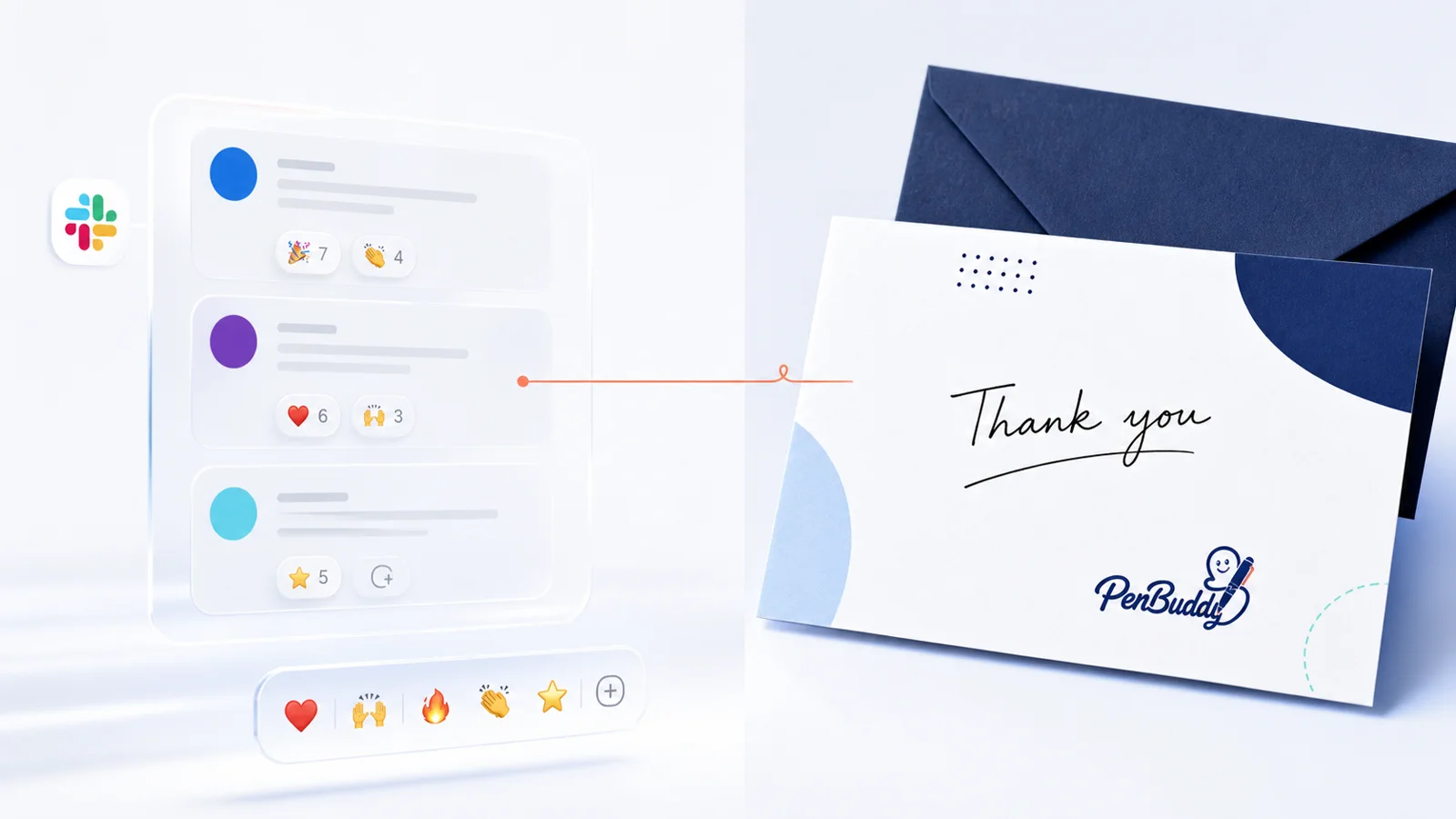
Start with the job the message needs to do
A Slack post can do something a mailed card cannot: let the whole team celebrate together right now. A card can do something a Slack post usually cannot: give one person a private, physical reminder that the company noticed. Those are different jobs. Most recognition programs need both.
Before choosing a channel, ask who the audience is. A public launch win may belong in the team channel. A thank-you after a difficult month may feel better in private. A work anniversary can use both: a timely public post and a card with a note the employee can take home.
Slack works well for recognition that is timely and shared
Recognition is useful when it tells people what good work looked like. A short post that names the customer problem someone solved, the teammate they helped, or the decision they improved gives the whole group context. Coworkers can respond, and the employee gets credit while the work is still fresh.
- Post everyday wins while the details are still clear.
- Name the work and its effect instead of writing only “great job.”
- Use a team channel when coworkers contributed or should learn from the example.
- Ask before posting praise that mentions a personal event, health issue, or difficult period.
- Do not make reactions or reply counts the measure of whether recognition mattered.
The weakness is attention. Microsoft reported that workers using Microsoft 365 were interrupted about 275 times during core work hours by meetings, email, or chat. The study covered Microsoft 365 rather than Slack. Even so, it describes the crowded environment any chat recognition enters. A sincere post can disappear between work requests within minutes.
Source:Microsoft WorkLab, Infinite WorkdayA card gives important recognition its own space
A card arrives away from the project channel, ticket queue, and meeting reminders. The employee has to pick it up and open it. Reactions will vary. The format still gives the message a separate moment and makes it possible to keep the note on a desk, shelf, or fridge.
Research on physical advertising mail found that participants spent more time with it and remembered it better than digital advertising. Employee appreciation is a different setting, so this should not be treated as proof that every card beats every message. It is useful adjacent evidence that paper receives a different kind of attention.
Source:USPS OIG and Temple University mail study- Work anniversaries where the note can mention a real contribution from the year.
- New-hire welcomes sent before the first week becomes a wall of setup tasks.
- Manager thank-yous after hard, mostly invisible work.
- Remote employee recognition that arrives outside company software.
- Private milestones an employee has agreed to have recognized.
Public praise can create pressure, too
A recognition program should not assume every employee wants the same amount of attention. Public birthday posts can expose information someone did not want shared. Praise tied to long hours can accidentally celebrate overwork. A crowded channel can also turn recognition into a visible popularity contest when some posts receive more reactions than others.
Give employees a preference for public, private, or no milestone recognition where practical. Managers can still acknowledge good work directly. The preference is about format, not whether the person's contribution matters.
The best combined workflow is simple
- Post the timely version in chat: what happened, who helped, and why it mattered.
- Save cards for milestones, sustained effort, or work that deserves a more personal follow-up.
- Ask the manager for one detail that only applies to that employee.
- Keep private details out of public posts and mailing data limited to what the send requires.
- Review recognition by team and location so quiet or remote employees are not routinely missed.
- Check the program quarterly. More posts and more cards do not automatically mean better recognition.
Where PenBuddy fits
PenBuddy uses employee CSV data to queue recurring moments such as birthdays and anniversaries. HR can use approved templates, collect useful manager context, review card batches, and see what was sent. The message is written on a 5-by-7-inch card with a real pen, then addressed, stamped, and mailed.
It does not replace Slack, manager judgment, or a healthy workplace. It solves a narrower problem: the team decided a physical note is appropriate, and now somebody needs to make sure it gets written and mailed.